Arnold Print Works
Arnold Print Works, at one time a world leader in textile manufacturing with offices in New York City and Paris, had its beginnings in the burgeoning factory town of North Adams, Massachusetts. A fledgling company when the American Civil War began, it was the city’s largest employer by the turn of the twentieth century, and remained a pillar in the community until closing its sprawling Marshall Street complex just prior to the Second World War.
Text
Nestled between the north and south branches of the Hoosic River, the Marshall Street complex that now houses MassMoCA has played a major role in the history of North Adams. As the country entered the tumultuous years of the U.S. Civil War, the budding, young industries in Berkshire County were bolstered by wartime production and government contracts. Shortly after the war began, Oliver, Harvey and John Arnold, founders of Arnold Print Works (APW) began building new factory space for their expanding cloth and printing activities at the Marshall street site. The price of cloth climbed during the war, and APW’s contract for the production of Union uniforms, fueled the expansion.
But in December 1871, fire ravaged Arnold Print Works (APW) and eight of its Marshall Street buildings burned to the ground. With little insurance or financial reserves, the future of APW was precarious. Assisted by financial backing from local businessmen, including future APW leader Albert C. Houghton, the firm began rebuilding almost immediately, and was producing again by January of 1874. Houghton effectively took over management of Arnold Print Works, and controlled it until his death in 1914. During his tenure, the print works survived bankruptcy and reorganization, and by 1905 was the single largest employer in North Adams. The Marshall Street site now included 25 of the 26 buildings in existence today, and had become one of the leading textile producers in the world.
Even given the success of APW’s prints and fabrics, the company’s financial health faltered again after the turn of the twentieth century. World War I government contracts went elsewhere and the market for high-end fabrics dwindled. The ensuing Depression drove cloth prices down further, and cheaper production from textile mills in the southern U.S. made it hard to compete with them. Soon after the U.S. entered World War II, Arnold Print Works closed its Marshall Street operations and condensed what was left of its activities in its Adams mills.
Files

Arnold Print Works
By the turn of the 20th century, Arnold Print Works was the largest employer in North Adams, with close to 3,200 workers. Postcard, c. 1907 | Source: Courtesy of North Adams Historical Society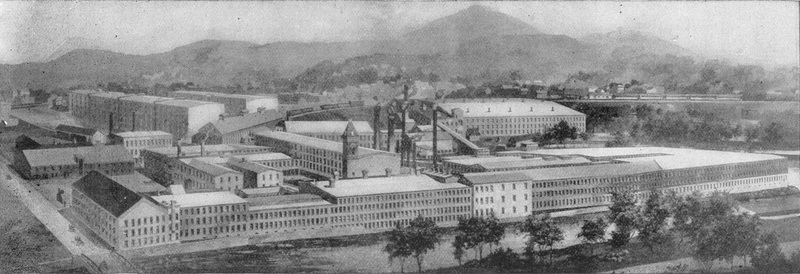
Arnold Print Works, Marshall St. Complex.
Between 1871 and 1890, 25 of the 26 buildings currently housing MassMoCA were built. The original buildings burned down in 1871 but rebuilding began immediately, with the financial assistance from local businessmen, including Albert C. Houghton. c. 1890 | Source: Courtesy of Paul Marino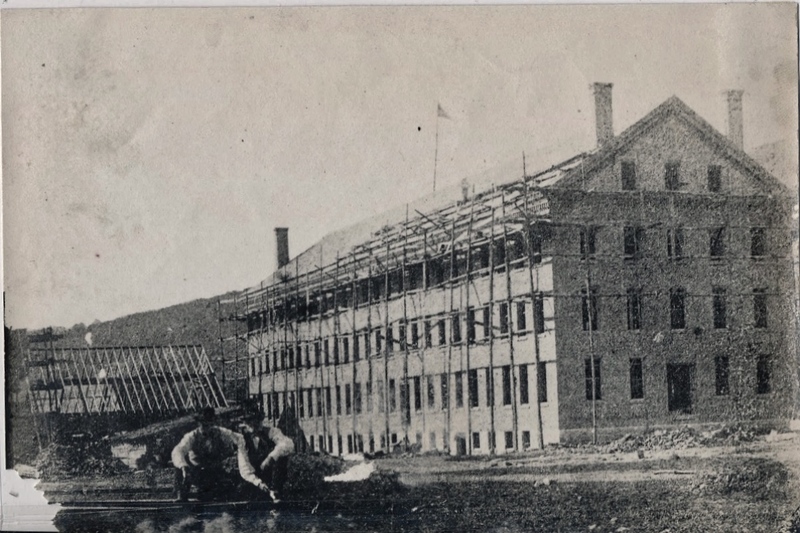
Oliver and Harvey Arnold during construction of Arnold Print Works factory at Marshall Street. c. 1861-3
Source: Courtesy of North Adams Public Library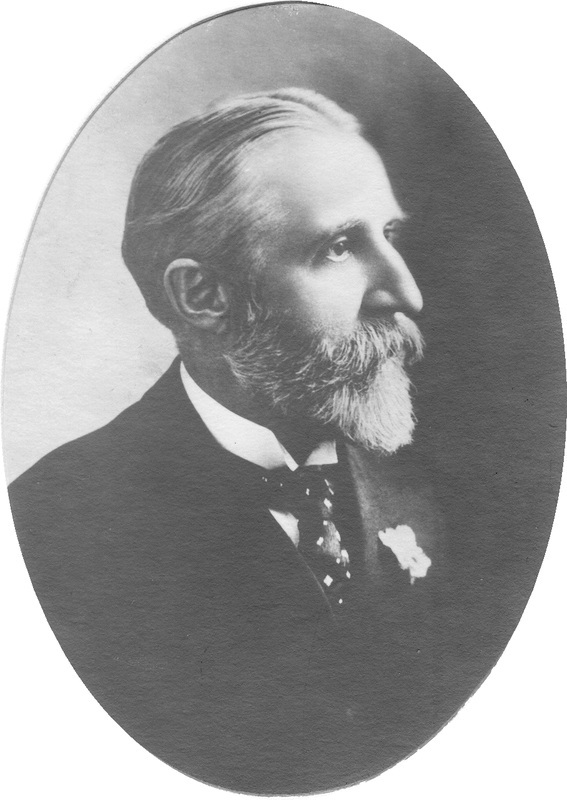
Albert C. Houghton.
Houghton, instrumental in rebuilding APW’s Marshall Street facilities after they burned down in 1871, took over day-to-day management of the firm after operations resumes. He became its President in 1881, and was elected the first Mayor of North Adams in 1896. c. 1896. | Source: Courtesy of Paul Marino.
Finished product being loaded for shipment at Arnold Print Works, c.1900.
Source: Courtesy of North Adams Public Library.
Dedication of the World War I service flag, including an initial 83 stars symbolizing each APW employee in active service, c. 1917
Source: The Arnold Print, Courtesy of North Adams Public Library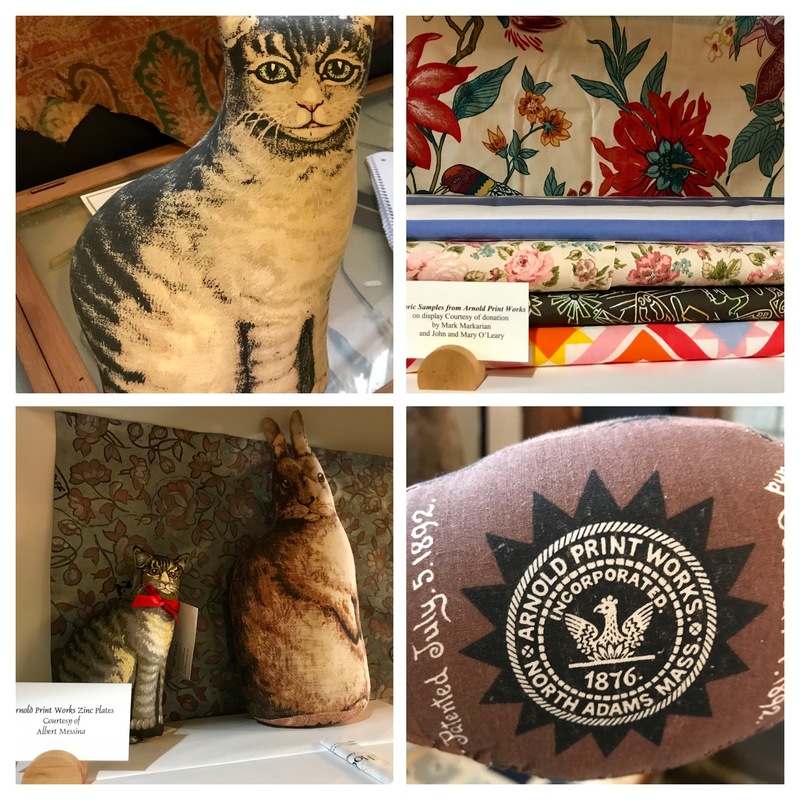
Printed fabric and dolls. C. 1890’s. APW printed fabrics included the still popular sewing patterns for “Tabby” cats, kittens, monkeys, owls and other. The doll patterns were marketed as sewing for children.
Source: Photograph by Jessica Jones.